Supplemental Nursing system (SNS)
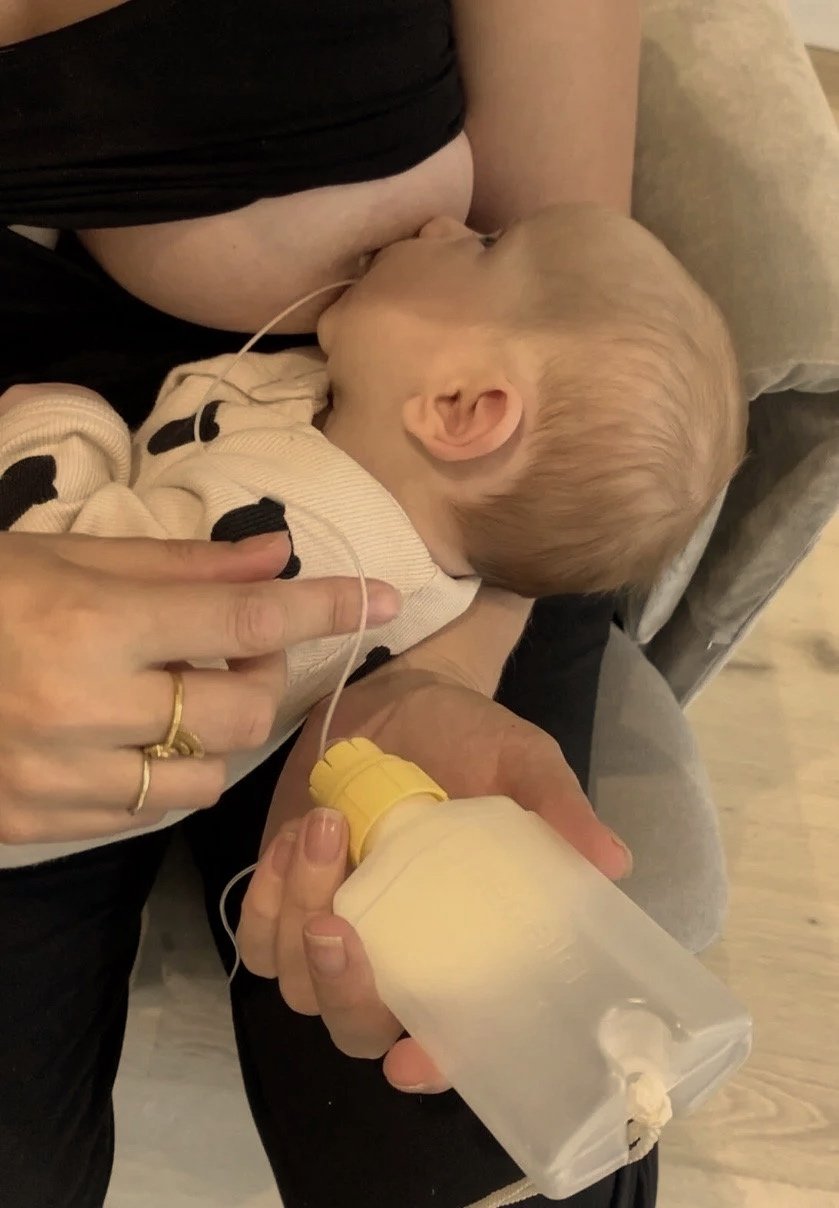
A supplemental nursing system (SNS) is a thin tube or device that delivers supplemental milk (breastmilk, donor milk, or formula) at the breast while the baby nurses. It supports breastfeeding when milk supply is low, when relactation is desired, or when a baby has latch/feeding challenges. Below are clear, step-by-step instructions and practical tips for safe and effective use.
What you need
Supplemental nursing system (tube + container or feeding bag) or a packaged SNS device.
Supplemental milk (expressed breastmilk, donor milk, or formula as directed by a health provider).
Comfortable chair and pillows for positioning.
Clean scissors (if needed to cut tubing) and tape or a nursing bra clip to secure tubing.
Hand hygiene supplies (soap and water or hand sanitizer).
Preparation
Wash hands thoroughly.
Prepare the supplemental milk according to safety guidelines (store, warm, and handle breastmilk or formula appropriately).
Assemble the SNS per manufacturer instructions: attach tubing to the reservoir or container. Prime the tube so there is milk in the tubing out to the tip (this prevents the baby from getting only air on the first suck).
If using reusable equipment, ensure it has been cleaned and sterilized as instructed.
Positioning the tube at the breast
Place the tip of the tube alongside your nipple so it lies against the areola or at the corner of the mouth where the baby will latch. Common placements:
Lay tube across the top of the breast and under the nipple so it sits along the areola edge.
Affix the tube to the breast with gentle tape or tuck it into your nursing bra or a small slit in the bra to keep it in place.
Make sure the tube’s tip doesn’t extend past the nipple so it won’t interfere with latch; the tip should be barely visible or flush with the areola surface.
If using two tubes (dual-tube SNS), position one tube at each breast following the same guidance.
Latching and feeding
Bring baby to breast using a comfortable nursing position (cradle, football, laid-back, etc.). Encourage a wide-open mouth latch.
Aim the nipple and tube toward the roof of the baby's mouth so the baby takes both nipple and tube into a deep latch (nipple and a portion of the areola).
Observe the tube tip: milk should be visible and, when the baby sucks, you should see or hear milk flow. If you used a manual reservoir, compressing it or letting gravity feed will deliver milk; some reservoirs use a slower flow control.
Allow the baby to nurse on one breast until they pause or seem satisfied; you can switch sides if needed. If the baby becomes fussy or falls asleep, stimulate latch or burp and attempt relatch.
Monitor for adequate swallowing and breathing. If the baby coughs or gags, reposition the tube or adjust flow rate.
Managing flow
Flow should be slow and steady—mimicking breastmilk flow. If milk flows too quickly and the baby coughs, reduce the flow (tip: elevate the reservoir less, loosen any clamp, or use a slower-flow setting if available).
If flow is too slow and the baby tires, increase flow modestly (raise reservoir slightly or open clamp more). If using a pump-attached or bag system, follow instructions for flow control.
Ensure tubing is free of kinks and air bubbles. Re-prime if air enters the tube.
Troubleshooting common issues
Tube dislodges: Pause, re-prime if needed, reposition the tube, and relatch the baby.
Baby won’t take tube or nipple: Try different breastfeeding positions, skin-to-skin, or let baby begin with a few minutes of non-nutritive sucking at the breast before introducing the tube.
Nasal or breathing difficulty: Stop and assess; consult a clinician if problems persist.
Leakage from the tube connection: Check fittings and clamps; replace tubing if damaged.
After feeding
Remove tubing gently from the breast.
Store any unused prepared milk according to safe-handling guidelines.
Clean and sterilize SNS parts per manufacturer instructions. Many reusable systems require thorough cleaning and periodic sterilization.
Safety and hygiene
Follow manufacturer instructions for assembly, cleaning, and replacement.
Use appropriate milk for your baby; consult a healthcare provider about donor milk or formula use.
Avoid leaving tubing in place between feeds unless instructed; prolonged tube contact can increase infection risk.
If you have pain, nipple damage, signs of mastitis, or if the baby is not gaining weight or shows signs of dehydration, contact a lactation consultant or healthcare provider promptly.
When to get help
Baby is not swallowing well or not gaining weight
